

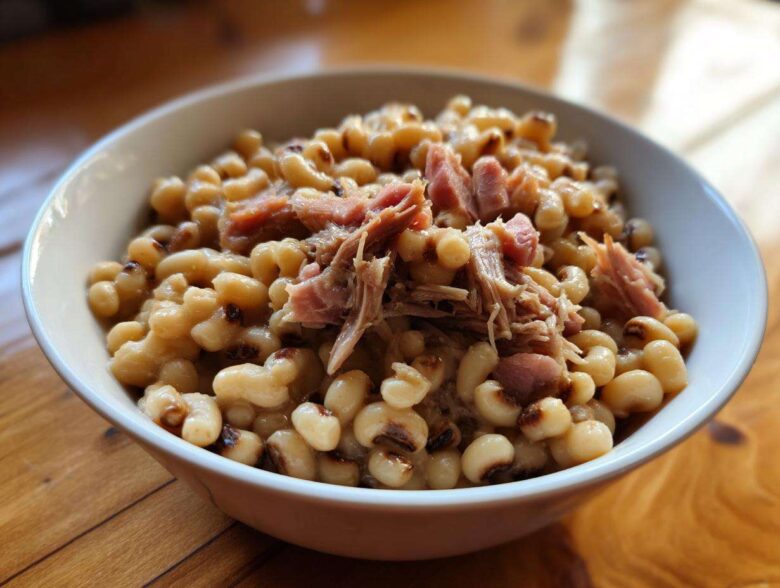
Oh, honey, when you talk about real Southern comfort food, you have to talk about black eyed peas. Forget those bland, quick-cooking cans you find on the shelf! My kitchen changes completely when I get that smoky flavor going. This recipe for authentic Southern black eyed peas uses a smoked ham hock, and trust me, nothing else beats it for that deeply satisfying, hearty taste. I learned this method from my Aunt Clara down in Georgia. She always said, “If you want luck, you gotta put some smoke in your pot!” It’s traditional cooking at its absolute best, and it’s what every family deserves on their table.
Why This Is the Best Southern Black Eyed Peas Recipe
Listen, I’ve tried making these peas just with bacon bits, and it’s fine, but it’s not *it*. This recipe proves you don’t need a thousand steps to make something amazing. We rely on slow cooking and one key smoked ingredient to do the heavy lifting. That deep, authentic flavor you remember from holiday meals? That’s what we’re capturing here.
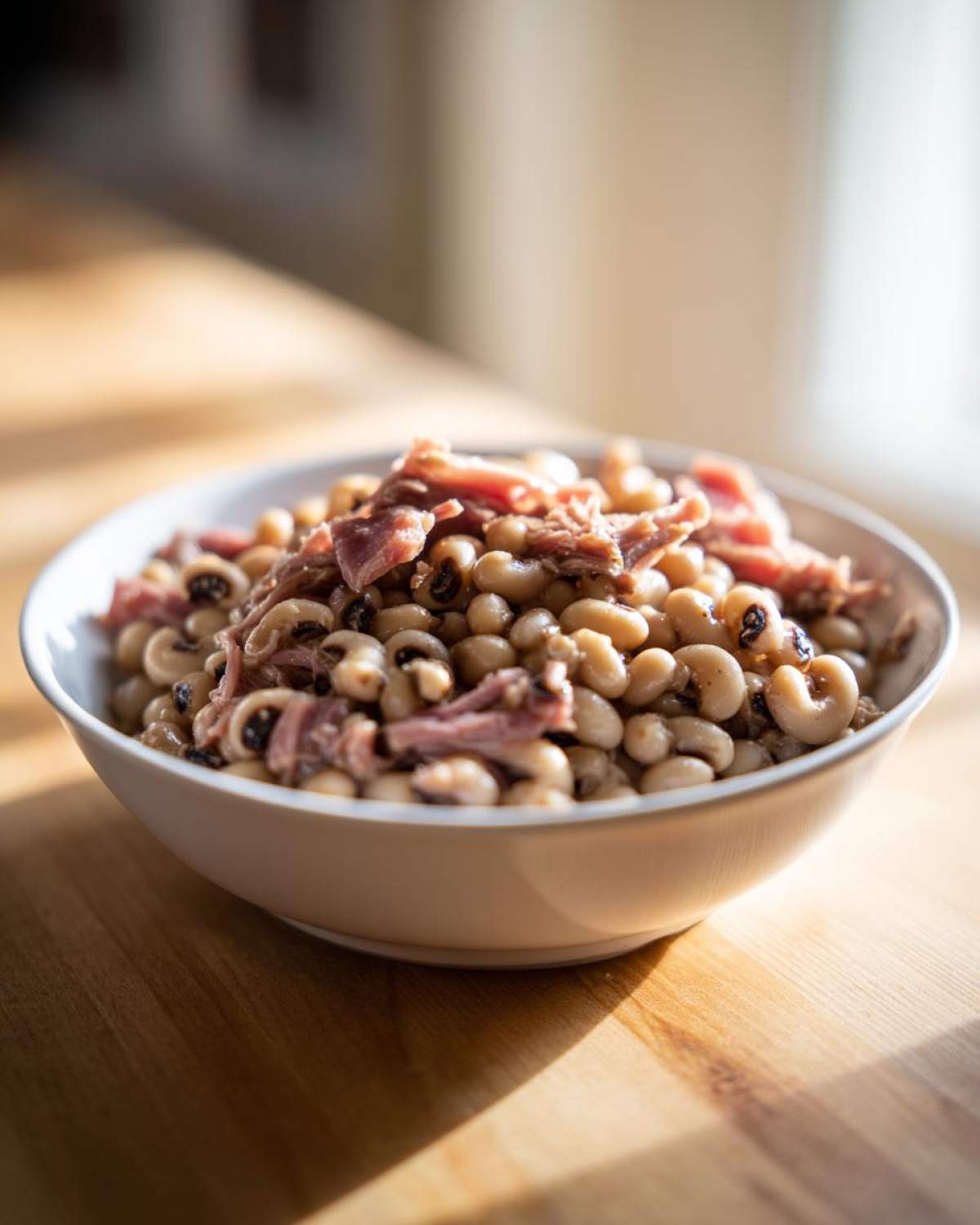
- It’s a true one-pot wonder, which means less scrubbing!
- It works perfectly on the stovetop or tucked away in the Crock Pot.
- The final texture is rich and hearty—not watery or bland.
- It instantly makes your whole house smell like home. This is the best Southern black eyed peas recipe, hands down.
Achieving Deep, Smoky Flavor in Your Black Eyed Peas
The ham hock isn’t just for show, sweetie, it’s non-negotiable for that authentic taste! You cannot replicate the depth that bone-in smoked pork brings just by using paprika or liquid smoke. It gently bastes the peas as they simmer, rendering out that incredible smoky fat that coats every single bean. Honestly, it’s the secret backbone of any truly great pot of smoky black eyed peas.
Gathering Ingredients for Flavorful Black Eyed Peas
Okay, now that you know how good these are going to be, let’s talk about what you need to pull them off. Good Southern cooking starts with good ingredients—nothing fancy, just honest things that work well together. We are shooting for flavorful black eyed peas that taste like they simmered all day. Don’t substitute the ham hock unless you absolutely have to because that smoky essence is the whole show. Get quality broth, fresh veggies, and let’s get started!
- 1 pound dried black eyed peas, rinsed and picked over
- 1 smoked ham hock (about 1 pound)
- 6 cups chicken broth or water
- 1 large yellow onion, chopped
- 2 celery stalks, chopped
- 1 green bell pepper, chopped
- 4 cloves garlic, minced
- 1 teaspoon dried thyme
- 1 bay leaf
- 1/2 teaspoon smoked paprika
- 1/4 teaspoon cayenne pepper (optional)
- Salt and black pepper to taste
- 2 tablespoons apple cider vinegar (added at the end)
Ingredient Notes and Substitutions
About that ham hock: Look for one that feels heavy for its size, meaning it has plenty of meat. If you just can’t find one, you can use four thick slices of bacon instead! Just render the bacon down until crisp first, then cook your onion and celery in that leftover fat—it gives you that nice smoky start. And listen closely about the vinegar! We add the apple cider vinegar right at the very end. If you drop it in too soon, the acid can make the skins of the black eyed peas tough, and nobody wants chewy peas!
How to Cook Black Eyed Peas: Stovetop Instructions
Alright, let’s marry everything together in one big pot. If you’re doing this the traditional stovetop way—which I highly recommend for the control—grab your biggest, heaviest Dutch oven! We toss everything in, yes, everything, right at the beginning. Get your rinsed black eyed peas, that gorgeous ham hock, the broth, all your chopped veggies—onion, celery, pepper—the garlic, and all those lovely dried spices like thyme and paprika straight into the pot.
Turn the heat up high and bring that whole beautiful mess to a boil. Don’t be shy; you need a good rolling boil to get things moving! Once you hit that boil, immediately drop the heat way down low, cover it up with a snug-fitting lid, and let your amazing Southern black eyed peas go to town simmering. This isn’t a quick-fix meal; you need patience for flavor development, so plan for a good hour and a half, maybe two, depending on your peas.
Simmering and Achieving Tender Black Eyed Peas
Keep checking on them every 30 minutes or so. Give them a gentle stir from the bottom with a wooden spoon—this stops any bits from sticking and scorching, which tastes terrible! You aren’t looking for them to dissolve into complete mush; we want them tender. If you can gently mash a pea between two fingers and it breaks apart easily without resisting, they are getting close. If you feel them still fighting back, give them another 20 minutes under that lid. That slow, steady heat is how we coax the tenderness out of those dried beans.
Slow Cooker Black Eyed Peas: The Crock Pot Method
Now, I know you’re busy, and sometimes you just need to set it and forget it, right? Bless the invention of the Crock Pot! Making Slow Cooker Black Eyed Peas is just as easy as the stovetop version, maybe even easier. You get that *same* deep, authentic flavor from the ham hock without hovering over the stove!
The beauty of the slow cooker is that it handles the gentle cooking perfectly. Just like the regular instructions, dump everything—the peas, the hock, the veggies, and your broth—right into the insert. You don’t really need to layer it fancy, just make sure the meat is mostly submerged if you can. Set it to low for about 6 to 8 hours. If you’re rushing on game day or something, high works in about 4 hours, but low and slow is always what gives you the best black eyed peas.
Finishing Touches for Perfect Black Eyed Peas with Ham Hock
We are almost there, friends! Once those peas are nice and tender—and I mean meltingly tender—it’s time for the crucial finishing steps that separate good black eyed peas from truly spectacular ones. First things first, carefully lift that big, beautiful ham hock out of the pot. Be careful, it’s heavy! Use tongs and set it on a plate. While it cools just slightly, fish out that bay leaf and toss it. We don’t want anyone biting into that bit of dried foliage!
When you can handle the hock, shred all that delicious, smoky meat right off the bone. It’s going to fall apart easily! Scrape every last bit of that good meat back into the pot with your wonderfully rich broth and peas. Now, here’s the real game-changer before we serve: stir in those two tablespoons of apple cider vinegar. This little splash of acid brightens up all that smoky richness from cooking the black eyed peas. Remember, we wait until the very end so the acid doesn’t keep the peas from softening up!
Creating Creamy Black Eyed Peas Texture
If you love that thicker, almost stew-like consistency, this trick is for you to get Creamy Black Eyed Peas. This is Aunt Clara’s trick for making them feel heartier. Take a ladle or a small cup and scoop out about half a cup of the cooked peas—make sure you get some of the liquid too. Put those into a separate small bowl and mash them up really well with the back of a fork or a potato masher until they are basically mush.
Scrape that thick mash right back into your main pot. Give everything a good stir! Those mashed starchy peas act as a natural thickener for the rest of the pot. Then, taste it. Because the ham hock was salty, you might not need much extra salt, but season with pepper until it tastes exactly like home to you. That’s it—perfect, hearty, flavorful black eyed peas!
Serving Suggestions for Your Hearty Bean Recipes
So the pot is done, the meat is shredded back in, and the whole kitchen smells incredible! Now, what do you serve alongside these amazing peas? In the South, these aren’t just a side dish; they’re the tradition! If you are making these for your New Year’s Day Lucky Meal, you absolutely must have plenty of greens on the side—collards or turnip greens are the standard.
The greens represent money, and the peas represent luck for the coming year, so you need both on your plate! Tradition dictates you eat them both for good fortune. Also, you can’t serve this hearty bean recipe without some good, honest cornbread. I mean, you need something sturdy to sop up all that delicious, smoky liquid left at the bottom of the bowl. A nice buttermilk cornbread, maybe slightly sweet, maybe the crumbly kind, it doesn’t matter. Just make sure you sop every last drop!
We often serve this as the main event on a quiet weeknight, maybe just with a fresh slice of onion on top if we’re feeling fancy. They are filling enough on their own, but they always sing next to smoked ham or roasted pork shoulder if you’re making a big table spread. Enjoy digging in!
Just before you head off, please take a peek at our site disclaimer to understand how we put these recipes together and share our family methods. We try to be transparent about everything we do in the kitchen!
Storage and Reheating Traditional Black Eyed Peas
The best part about cooking a big pot of these smoky black eyed peas is that they are even better the next day! Don’t toss those leftovers; they are gold. You can store your traditional black eyed peas in an airtight container in the fridge for up to four days. They tend to thicken up quite a bit as they cool down, which is perfect!
When you’re ready to reheat, I always prefer the stovetop. Put them back in a small pot over medium-low heat. You’ll definitely need to add a splash of broth or just water while they heat up to bring them back to that luscious, creamy consistency. Don’t blast them on high heat, or you’ll end up scorching the beans stuck to the bottom. Just a gentle warm-up, and those black eyed peas are ready to go all over again!
Frequently Asked Questions About Black Eyed Peas
I get so many questions every time I post photos of this recipe—it seems everyone wants to know how to master smoky black eyed peas at home! Here are a few of the things folks ask me the most about how to cook black eyed peas perfectly every time.
Can I make this a vegetarian or vegan recipe?
Oh, absolutely, you can! I totally get it; sometimes you just don’t have that ham hock or you’re cooking for long-time vegetarians. The trick to keeping this a great Comfort Food Peas dish while leaving out the meat is focusing on that smoky flavor boost. Since we can’t use rendered pork fat, you need to layer in smoke elsewhere. I suggest adding an extra half teaspoon of smoked paprika right in with the other spices. Then, after you cook them down, stir in just a tiny dash—maybe a quarter teaspoon—of good quality liquid smoke when you add the vinegar. Use vegetable broth instead of chicken broth, and bam! You have genuinely delicious smoky black eyed peas that are completely vegan.
Do I need to soak dried black eyed peas before cooking?
This is a classic question about how to cook black eyed peas! The short answer is no, you don’t *have* to soak them, especially if you’re using the two-hour stovetop method I laid out. They cook faster than kidney beans or dried lima beans, so they usually get tender fine just by simmering. However,
I always recommend it if you have the time! If you soak them overnight—or even just for a quick four-hour soak—it cuts down on that total simmer time considerably, maybe by 30 minutes or so. Plus, soaking helps clean out any debris and can make the peas a little easier to digest if beans sometimes give you trouble. If you soak them, just make sure you drain and rinse them before you toss them in the pot with your ham hock the next day!
If you have any other burning questions about making these hearty bean recipes, please don’t hesitate to reach out on my contact page. I love chatting about Southern cooking!
Estimated Nutritional Information for Black Eyed Peas
Whenever I share a recipe this soul-satisfying, someone always asks about the numbers, so I did the homework for you! Keep in mind that these numbers are just an estimate based on the ingredients I listed above—especially since the exact salt and fat content of your ham hock can vary wildly. This recipe is surprisingly good for you if you look at the fiber counts, though!
In a standard 1.5-cup serving of these hearty black eyed peas, here’s what you can generally expect:
- Calories: Around 320
- Protein: A whopping 20 grams! Great for keeping you full.
- Fiber: About 14 grams, which is fantastic for digestion.
- Total Fat: Roughly 10 grams (most of that good smoky flavor from the meat!)
This recipe definitely leans towards being low in sugar, which I love—it lets the natural sweetness of the peas shine through. If you are counting sodium, be cautious! Ham hocks are salty, so taste before you add much extra salt at the end. We’re happy this one lands firmly in the ‘Soul Food Legumes’ category that still feels nourishing. For the full details on how we calculate this information on the site, please check out our privacy policy!
PrintAuthentic Southern Black Eyed Peas with Ham Hock
Make traditional, flavorful Southern black eyed peas using a ham hock for a smoky, hearty taste. This recipe works well on the stovetop or in a slow cooker.
- Prep Time: 15 min
- Cook Time: 2 hours
- Total Time: 2 hours 15 min
- Yield: 6 servings
- Category: Side Dish
- Method: Stovetop Simmering
- Cuisine: Southern American
- Diet: Low Fat
Ingredients
- 1 pound dried black eyed peas, rinsed and picked over
- 1 smoked ham hock (about 1 pound)
- 6 cups chicken broth or water
- 1 large yellow onion, chopped
- 2 celery stalks, chopped
- 1 green bell pepper, chopped
- 4 cloves garlic, minced
- 1 teaspoon dried thyme
- 1 bay leaf
- 1/2 teaspoon smoked paprika
- 1/4 teaspoon cayenne pepper (optional)
- Salt and black pepper to taste
- 2 tablespoons apple cider vinegar (added at the end)
Instructions
- Place the rinsed black eyed peas, ham hock, chicken broth, onion, celery, bell pepper, garlic, thyme, bay leaf, smoked paprika, and cayenne pepper into a large pot or Dutch oven.
- Bring the mixture to a boil over high heat.
- Reduce the heat to low, cover the pot, and simmer for 1.5 to 2 hours, or until the peas are tender. Stir occasionally to prevent sticking. (If using a slow cooker, cook on low for 6-8 hours or high for 3-4 hours.)
- Remove the ham hock from the pot. Shred the meat from the bone, discarding the bone and any excess fat. Return the shredded meat to the pot.
- Remove and discard the bay leaf.
- Stir in the apple cider vinegar. Taste the peas and add salt and black pepper as needed. The ham hock adds salt, so season carefully.
- Simmer uncovered for another 15 minutes to allow the flavors to meld and the liquid to thicken slightly.
- Serve hot as a hearty side dish or main course.
Notes
- For a creamier texture, mash about 1/2 cup of the cooked peas against the side of the pot and stir them back in before serving.
- If you do not have a ham hock, you can substitute with 4 slices of thick-cut bacon, cooked until crisp before adding the vegetables.
- Soaking the peas overnight can reduce the cooking time by about 30 minutes.
Nutrition
- Serving Size: 1.5 cups
- Calories: 320
- Sugar: 3
- Sodium: 650
- Fat: 10
- Saturated Fat: 3
- Unsaturated Fat: 7
- Trans Fat: 0
- Carbohydrates: 45
- Fiber: 14
- Protein: 20
- Cholesterol: 35