

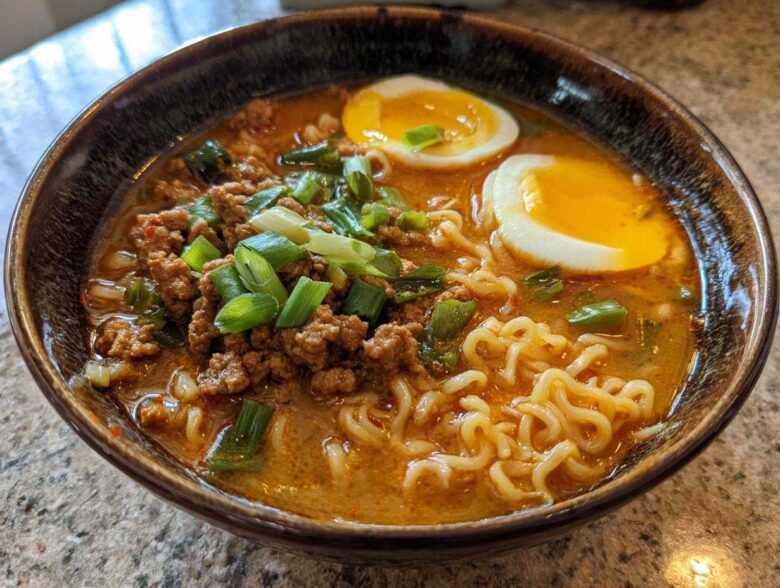
You know that feeling, right? The one where you’re scrolling through pictures, maybe thinking about some tiny noodle shop overseas, and you just need that perfect bowl of ramen? Not the watery stuff, but the real deal. For me, it’s always been the Spicy Miso Ramen. That combination of deep, savory umami hitting you first, followed by that wonderful, building little kick of heat—it’s unbeatable. Trust me, I’ve spent years trying to recreate the broth from that little stand in Shinjuku, and I think I finally nailed it with this recipe. The absolute star, though, has to be the jammy, flavor-soaked **Soft-Boiled Eggs**. Forget everything else; this is your definitive guide to conquering **Spicy Miso Ramen with Soft-Boiled Eggs** right here in your own kitchen. You’re going to love how easy the broth comes together once you have your flavor paste ready! Check out more of my kitchen adventures over at my main blog page while you wait for the water to boil.
Why This Spicy Miso Ramen with Soft-Boiled Eggs Stands Out
When you’re putting this much effort in, you deserve soup that sings! This recipe isn’t just another noodle bowl. It’s designed for maximum impact without stealing your entire weekend.
- Unparalleled Broth Depth: We use a dual miso blend—red for earthiness and white for sweetness—that creates a flavor profile you just can’t get from a single jar. It’s seriously umami-rich.
- Guaranteed Perfect Eggs: Forget rubbery whites! My precise 6 minute, 30-second boil means guaranteed jammy yolks that soak up that delicious marinade perfectly every single time.
- Restaurant Quality Taste: By building that spicy aromatic paste first before adding it to the stock (which is key!), you’re locking in flavors much deeper than just dumping everything in the pot. If you want to read more about broth magic, I detailed my absolute best ramen broth techniques in a separate post!
Gathering Ingredients for Your Spicy Miso Ramen with Soft-Boiled Eggs
Okay, gathering ingredients for ramen is always a bit of an adventure, but trust me on the miso blend—it is critical for that Authentic Spicy Miso Flavor. We need richness from the red miso and just a touch of sweetness from the white. Don’t skimp on the aromatics either; fresh ginger and garlic make all the difference for an Umami Rich Ramen! While you’re gathering stuff, check out my recipe for homemade brown gravy sometime; it proves that quality base ingredients always win.
For the Perfect Homemade Ramen Eggs
Start here first because these need time to soak up all that salty goodness!
- 4 large eggs (you want them cold from the fridge!)
- 1/4 cup soy sauce
- 1/4 cup mirin
Building the Miso Ramen Broth Base
This is where we build the backbone of the soup. Mince and grate these finely!
- 2 quarts good quality chicken or vegetable stock
- 4 tablespoons red miso paste
- 2 tablespoons white miso paste
- 1 tablespoon soy sauce (for salty finish)
- 1 tablespoon sesame oil
- 1 tablespoon gochujang or chili garlic sauce (your heat source!)
- 1 teaspoon fresh ginger, grated
- 2 cloves garlic, minced
- 1/2 teaspoon ground white pepper
Noodles and Essential Toppings for Spicy Miso Ramen
Time for the fun bits that make it look like you ordered takeout from a fantastic spot!
- 4 servings fresh or dried ramen noodles (fresh is amazing if you can find it!)
- 4 ounces ground pork or thinly sliced cooked pork belly (chashu if you’re feeling fancy)
- 1 cup bean sprouts
- 4 sheets nori seaweed
- 2 green onions, thinly sliced
- Optional additions: sweet corn or bamboo shoots
Step-by-Step: Preparing the Soft Boiled Egg Ramen Topping
If you’re craving that perfect, gooey, jammy yolk, you have to be precise here. This is non-negotiable for incredible **Homemade Ramen Eggs**! First, get a small pot of water going until it’s at a full, rolling boil—no gentle simmering allowed. Gently ease your cold eggs (straight from the fridge!) into that furious water. I watch the timer like a hawk: exactly 6 minutes and 30 seconds. Any more, and it’s hard-boiled city; any less, and you’ll have raw white!
As soon as that timer goes off, dunk those babies straight into a big bowl of ice water. This immediate chill shock is what stops the cooking process instantly and makes peeling a breeze. You’ll want to peel them carefully once they are cool—don’t rush that step! After peeling, mix up your marinade (just soy sauce and sweet mirin, easy peasy). Drop the peeled eggs in, cover them up, and let them chill out in the fridge for at least two hours. If you can wait 24 hours? Even better! They’ll turn this gorgeous amber color and taste fantastic. I actually made a batch of easy egg bites last week, but these ramen eggs are on a whole other level of perfection.
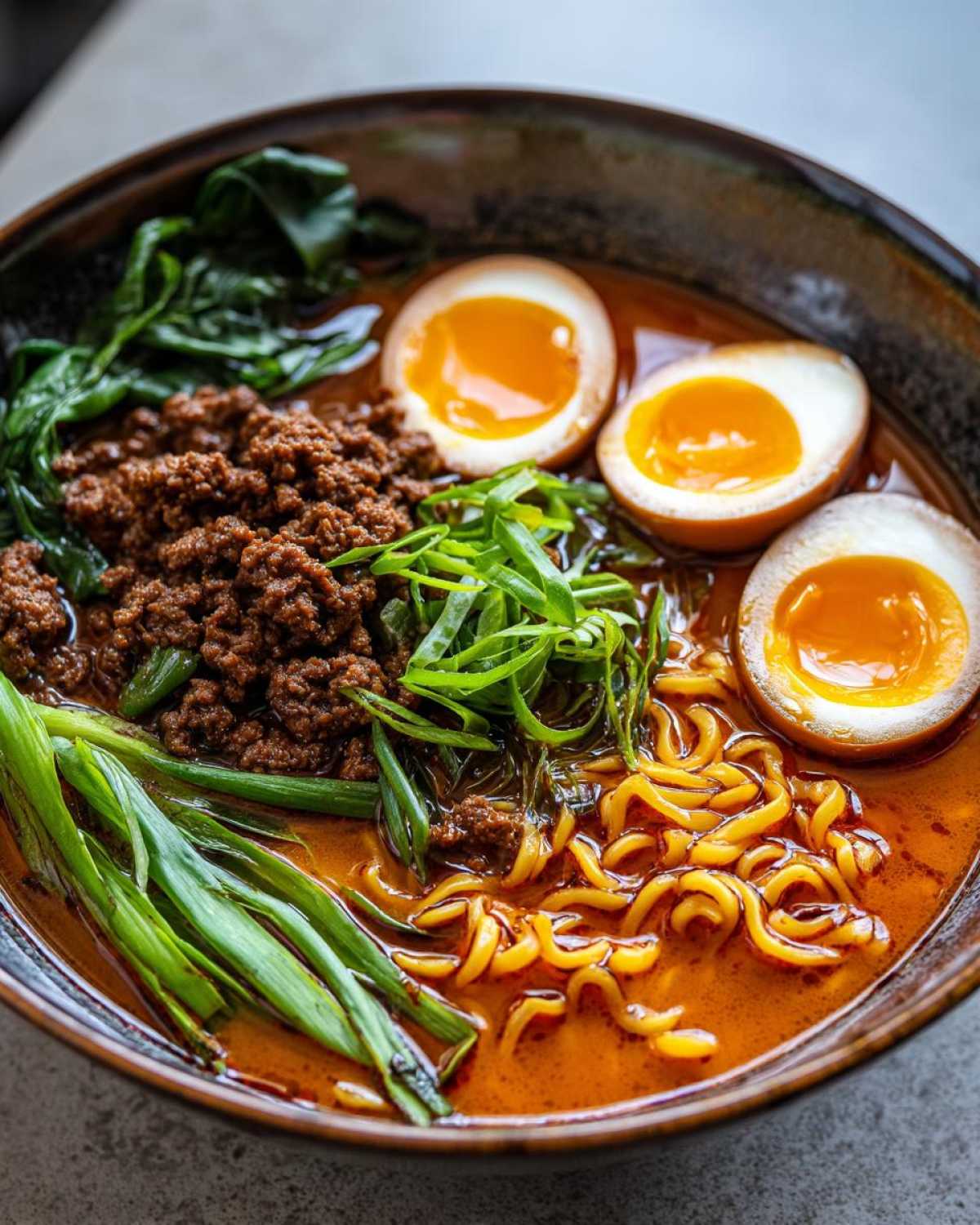
Crafting the Umami Rich Ramen Broth: The Heart of Spicy Miso Ramen
Now we move onto the most important part—the broth that gives you that deep, satisfying hug. Don’t just dump the miso in the stock! Oops! That makes it grainy and takes away that beautiful depth. We need to build a flavor bomb first.
In a separate small bowl, take your time whisking together the red miso, the white miso, that fiery gochujang or chili sauce, the sesame oil, that fresh grated ginger, the minced garlic, and the white pepper. You’re aiming for a smooth, consistent paste. This is where all the intense flavor lives, so make sure it’s fully incorporated before it even sees the stock pot. If you’re looking for other ways to amp up the heat in soups, check out my recipe for spicy black bean soup!
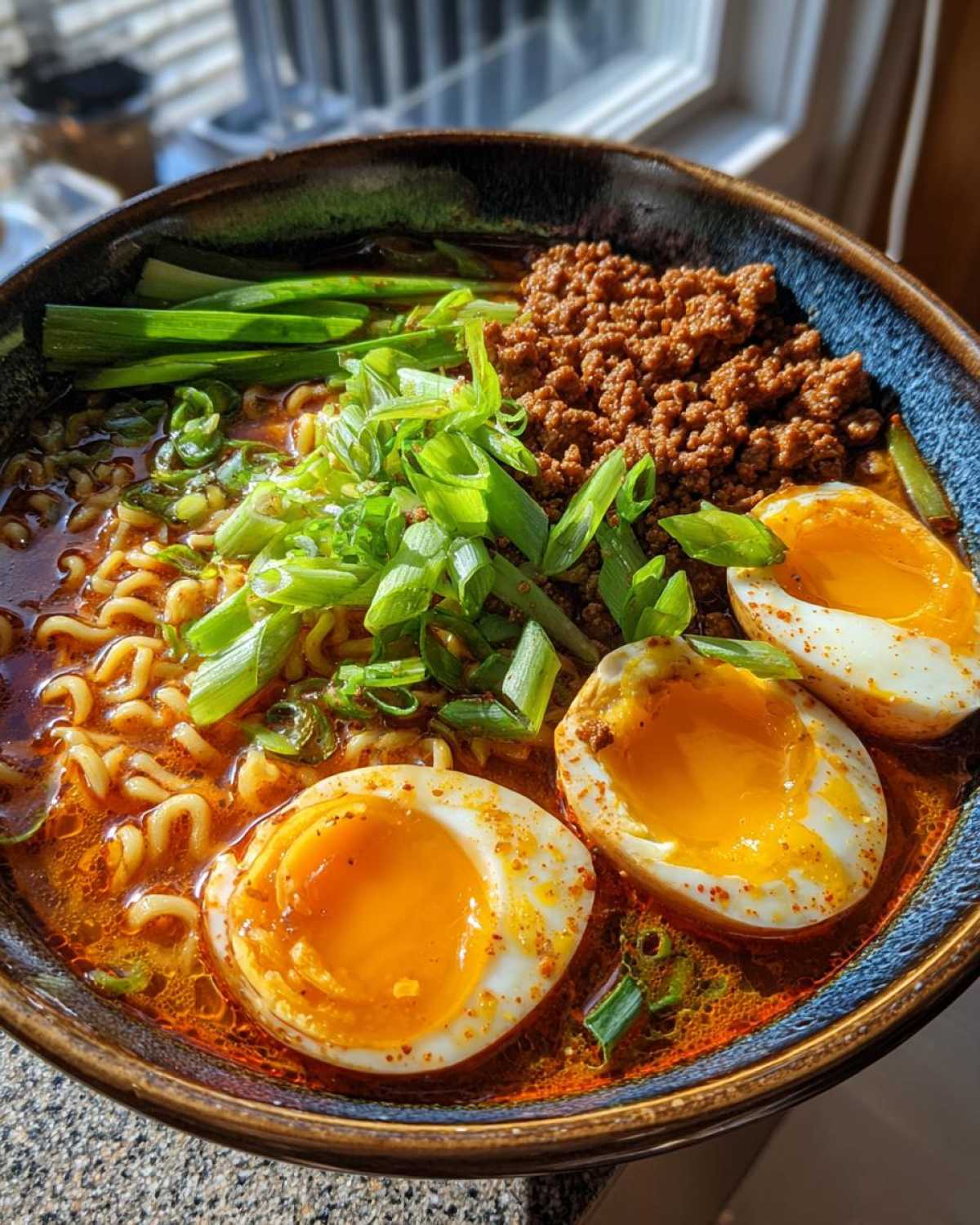
Next, bring your 2 quarts of stock up to a nice, gentle simmer. Once it’s hot, take it off the direct heat for one second and whisk in your miso paste mixture completely. It should disappear beautifully, turning your stock into that gorgeous, slightly opaque, spicy miso color. Add your final splash of soy sauce in now too. Keep it warm over low heat, but please, please don’t let it boil hard after the miso goes in. Boiling destroys the delicate flavor notes we just worked so hard to build up. This technique ensures you get the best spicy ramen noodle bowl possible!
Cooking Noodles and Assembling Your Spicy Miso Ramen with Soft-Boiled Eggs
We’re at the finish line! The broth is humming on low heat, and those eggs are waiting patiently. Now it’s time to throw the noodles into some boiling water and cook them strictly according to the package directions. No one likes gummy ramen!
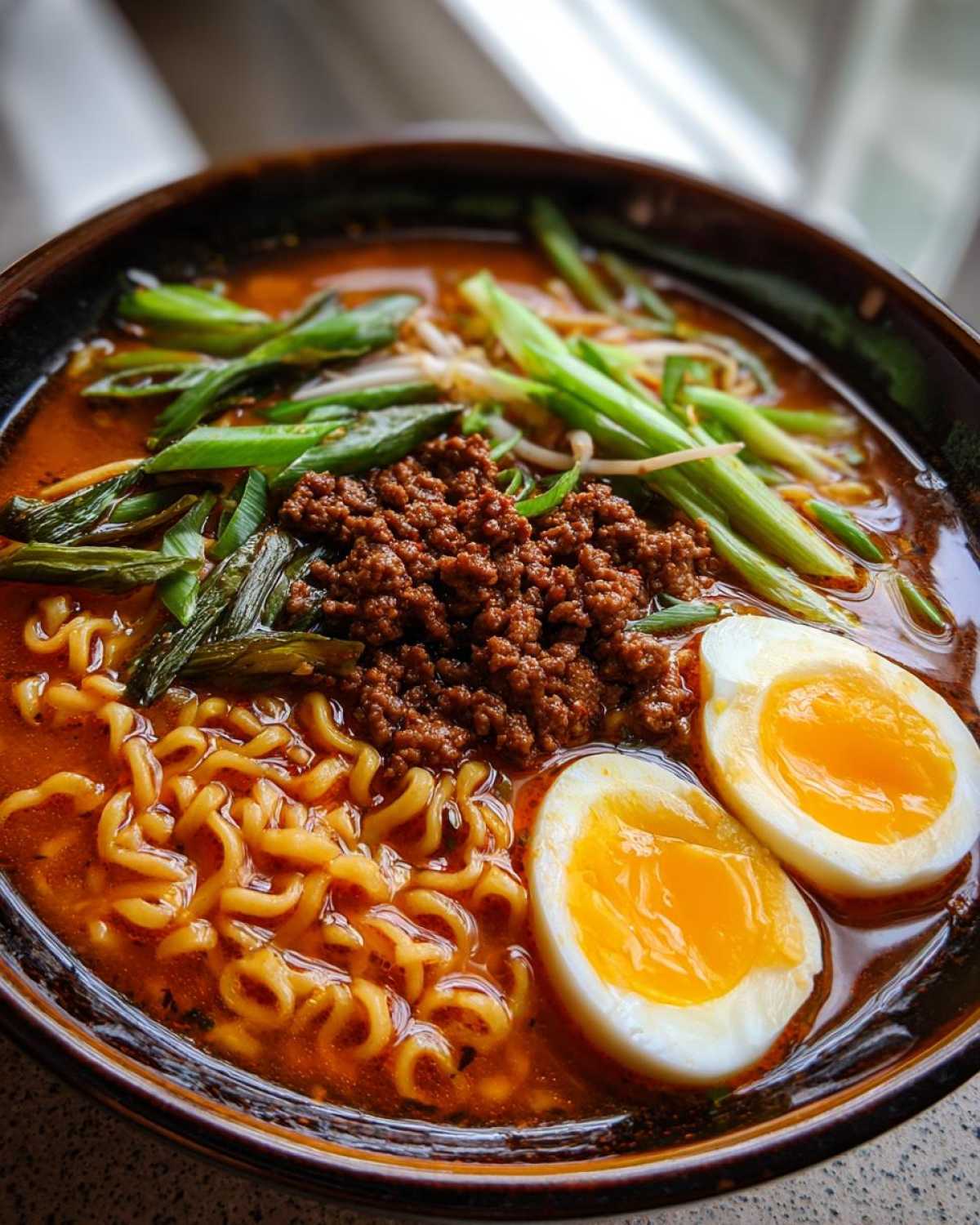
Drain them really, really well—we don’t want weak soup. Divide those hot noodles evenly into your four favorite large bowls. Next, ladle that deeply flavorful, **Umami Rich Ramen** broth generously over the top. Now, arrange your toppings with care—lay down your pork or chashu, scatter those crunchy bean sprouts, sprinkle on some green onions, and finally, slice your marinated eggs in half and nestle those beautiful yolks right on top. Don’t forget the crispy sheet of nori standing up in the side!
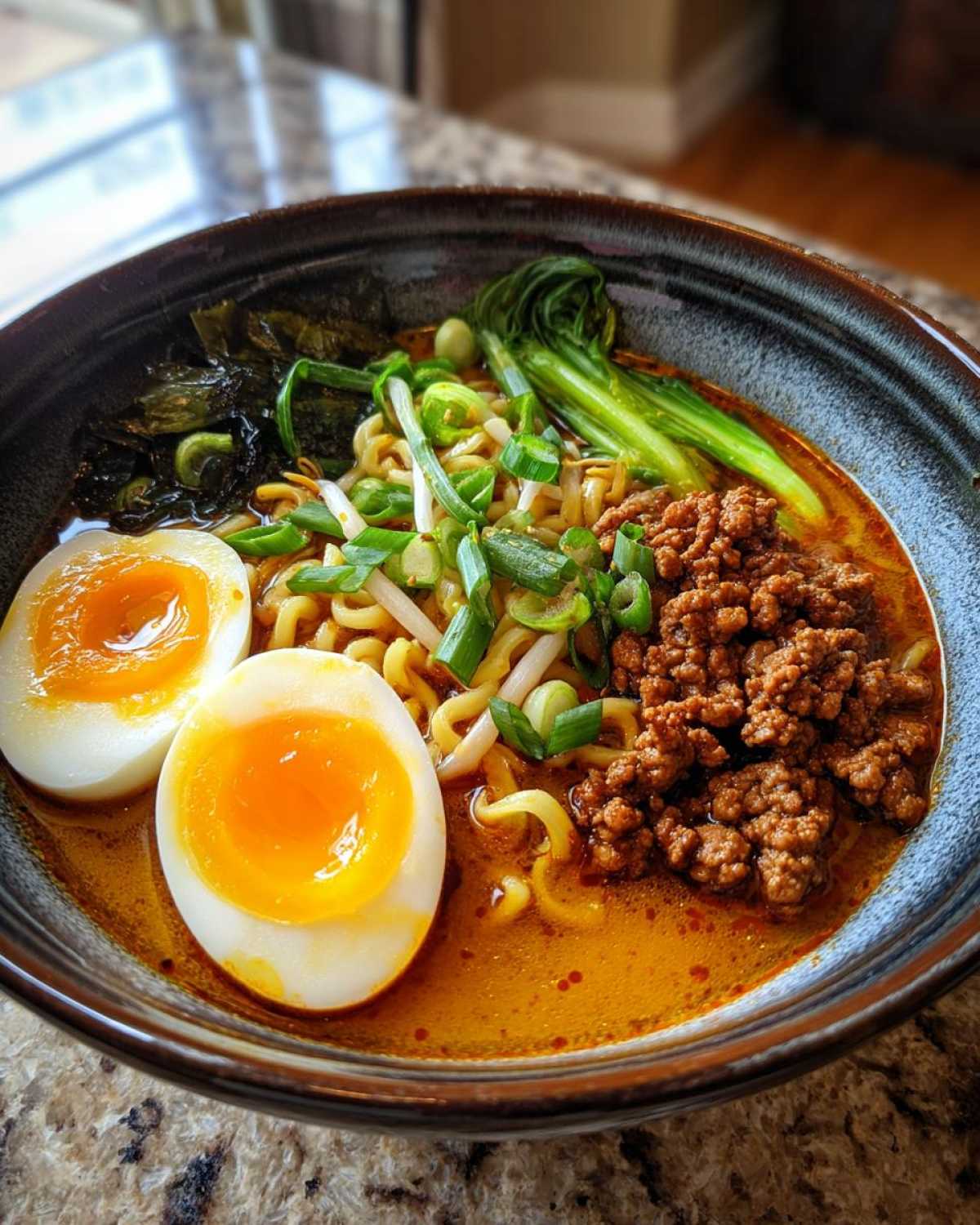
This whole glorious bowl of **Spicy Miso Ramen with Soft-Boiled Eggs** needs to hit your lips immediately! It’s the best way to eat it, trust me. Speaking of assembly, I use a similar layering technique when I make my easy homemade pizza dough; getting the order right makes all the difference!
Tips for Achieving Restaurant Quality Ramen from Scratch
Getting that perfect texture is all about tiny details, right? For the noodles, don’t overcook them one bit; they should still offer a little chew—that’s what makes it great **Ramen from Scratch**. Make sure we keep that broth piping hot right until ladling, because cold miso broth is just sad. When you go to slice those beautiful **Homemade Ramen Eggs**, use a very sharp, thin knife and wipe it clean between cuts so you don’t drag any of that dark marinade across the white.
If you didn’t have gochujang on hand, remember you can bump up the spice by using Sriracha if you mix in a tiny bit of brown sugar. It’s a good fix! If you want more comfort food ideas that transport you like this ramen does, you should check out my favorite chicken nuggets recipe sometime.
Ingredient Notes and Substitutions for Chili Miso Ramen
I know finding specialty ingredients can sometimes feel like a treasure hunt, but don’t panic if you can’t find both red and white miso! If you only have red miso, go for it—your soup will be earthier and deeper, leaning into that savory side of things. If you only have white, you might need a touch more soy sauce for saltiness, since white miso is milder. For the spice, if gochujang isn’t in your pantry, remember we can substitute Sriracha and brown sugar, but honestly, sometimes a good quality Rayu (Japanese chili oil) drizzled on top works wonders for that visual appeal too!
When you’re done, these notes should help you customize. And if you’re thinking about dessert after all that savory saltiness, you absolutely have to try my easy apple crisp with buttery oat topping!
Storing Leftovers of Your Spicy Asian Noodle Soup
Oh, leftovers! Sometimes a big pot of ramen is just too much for one sitting, which is totally fine. But listen closely when storing this incredible **Spicy Asian Noodle Soup**, because if you just chuck it all in one container, you’ll wake up to a sad, mushy mess. Never combine the noodles and the broth before storage!
Keep the broth—which is still packed with that amazing spicy miso flavor—in a sealed container in the fridge for up to three or four days. The eggs? They’ll keep their marinated goodness for the full time, too. When you’re ready for round two, reheat that broth until it’s steaming hot (it’s safe to bring it back to a gentle simmer now, just don’t boil hard). Then, and this is the secret, cook yourself a fresh batch of noodles! It makes all the difference. If you love chili leftovers, you have to try making my quick creamy chicken chili next!
Frequently Asked Questions About This Spicy Ramen Recipe
I know when you’re making something this good, you’re going to have a few questions pop up! It happens every time I make this back at home. We want this **Spicy Miso Ramen Recipe** to be perfect for you, so here are the things folks always ask me when they try to make true, restaurant-quality soup.
Can I make the broth ahead of time?
Oh yes, you absolutely can! I often make the broth base—that flavorful spicy miso paste mixed into the stock—a day or two ahead of time. It actually lets the flavors meld a little more! Just chill it down, but make sure you store it completely separate from the noodles and, of course, those wonderful **Homemade Ramen Eggs**.
How do I adjust the spice level for the Chili Miso Ramen?
This is easy to control! The main spice driver is that dollop of gochujang or chili garlic sauce in the paste. If you like things mild, just use half a tablespoon. If you want to sweat a little, add more! My favorite trick for those who like it fiery is to leave the base moderate and then add a drizzle of chili oil right over the top of the finished bowl. That way, everyone gets what they want!
What is the best way to peel the Homemade Ramen Eggs?
The secret is that immediate ice bath shock we talked about earlier. Once they’re cool enough to handle, you need speed! Start peeling them right away under cool, running water. The water helps seep under the membrane, and you’ll find the shell just slips right off. If you wait too long, they get tougher to peel cleanly.
If you’re still hungry for more baked goods after all that savory soup, you have to check out the recipe for my classic Southern pecan pie—it’s the perfect finish!
PrintSpicy Miso Ramen with Soft-Boiled Eggs
A recipe for rich, umami-forward spicy miso ramen broth, complete with instructions for perfectly jammy soft-boiled eggs.
- Prep Time: 20 min
- Cook Time: 25 min
- Total Time: 45 min
- Yield: 4 servings
- Category: Dinner
- Method: Stovetop
- Cuisine: Japanese
- Diet: Low Lactose
Ingredients
- 2 quarts chicken or vegetable stock
- 4 tablespoons red miso paste
- 2 tablespoons white miso paste
- 2 tablespoons soy sauce
- 1 tablespoon sesame oil
- 1 tablespoon gochujang or chili garlic sauce
- 1 teaspoon grated fresh ginger
- 2 cloves garlic, minced
- 1/2 teaspoon ground white pepper
- 4 servings fresh or dried ramen noodles
- 4 large eggs
- 1/4 cup soy sauce (for marinade)
- 1/4 cup mirin (for marinade)
- 4 ounces ground pork or thinly sliced cooked pork belly (chashu)
- 1 cup bean sprouts
- 4 sheets nori seaweed
- 2 green onions, thinly sliced
- Optional: corn, bamboo shoots, chili oil for serving
Instructions
- Prepare the eggs: Bring a small pot of water to a rolling boil. Gently lower the eggs into the boiling water. Cook for exactly 6 minutes and 30 seconds for a jammy yolk. Immediately transfer the eggs to an ice bath to stop cooking. Peel carefully once cool.
- Marinate the eggs: In a small container, mix the 1/4 cup soy sauce and 1/4 cup mirin. Place the peeled eggs in the marinade, cover, and refrigerate for at least 2 hours, or up to 24 hours.
- Make the broth base: In a small bowl, whisk together the red miso, white miso, gochujang/chili sauce, sesame oil, ginger, garlic, and white pepper until a smooth paste forms.
- Heat the stock: In a large pot, bring the chicken or vegetable stock to a simmer over medium heat.
- Combine broth: Whisk the miso paste mixture into the simmering stock until fully dissolved. Add the soy sauce. Keep the broth hot but do not boil vigorously after adding miso.
- Cook noodles: Cook the ramen noodles according to package directions. Drain well.
- Assemble the ramen: Divide the cooked noodles among four large bowls. Ladle the hot spicy miso broth over the noodles.
- Add toppings: Arrange the ground pork or chashu, bean sprouts, sliced green onions, and one halved marinated egg on top of each bowl. Add nori sheets.
- Serve immediately, adding chili oil if desired.
Notes
- For the best egg marinade, slice the eggs in half just before serving.
- If you cannot find gochujang, substitute with 1 tablespoon of sriracha mixed with 1 teaspoon of brown sugar.
- Use high-quality, fresh ramen noodles for the best texture.
Nutrition
- Serving Size: 1 bowl
- Calories: 550
- Sugar: 12
- Sodium: 1800
- Fat: 25
- Saturated Fat: 7
- Unsaturated Fat: 18
- Trans Fat: 0
- Carbohydrates: 60
- Fiber: 4
- Protein: 30
- Cholesterol: 250